Amazon Prime Video offers two streaming quality tiers that determine your viewing experience: Standard and Ultra. While both are included with your Amazon Prime membership at no extra cost, understanding the differences helps you make the most of your subscription—or consider whether a premium IPTV alternative like Echo Best IPTV might better serve your streaming needs.
This guide breaks down exactly what separates Prime Video Standard from Ultra, which devices support each tier, and how both compare to modern IPTV services that offer more control, better value, and often superior content libraries.
Article Update History
October 29, 2026
– Initial publication
– Verified Echo Best IPTV pricing (Economy €29.90, VIP €39.90, Ultra €49.90, Ultimate €69.90 annually)
– Confirmed 25+ servers, 50,000+ customers, 8 years in business
– Reviewed Prime Video quality tiers against current Amazon specifications
– Verified 4K content availability across all Echo Best IPTV plans
What Is Prime Video Standard Quality?
Prime Video Standard delivers content in Standard Definition (SD) and High Definition (HD) formats, with maximum resolution reaching 1080p. This tier is the baseline streaming quality available to all Prime members and works on virtually any device with an internet connection.
Standard Quality Specifications:
- Resolution: Up to 1080p (Full HD)
- Typical streaming quality: 720p to 1080p depending on content and bandwidth
- Bitrate: Variable, typically 3-5 Mbps for HD
- Compatible devices: All devices that support Prime Video
- Internet requirement: Minimum 5 Mbps recommended for HD streaming
Standard quality works well for smaller screens (phones, tablets, laptops) and situations where ultra-sharp picture quality isn’t critical. For most viewers on displays under 50 inches, the difference between HD and 4K is minimal from typical viewing distances.
What Is Prime Video Ultra Quality (4K Ultra HD)?
Prime Video Ultra—also called Ultra HD or 4K—delivers content at four times the resolution of standard HD, offering sharper images, better color depth, and support for advanced video technologies like HDR (High Dynamic Range) and Dolby Vision on compatible titles.
Ultra Quality Specifications:
- Resolution: Up to 2160p (4K Ultra HD)
- HDR support: HDR10, HDR10+, and Dolby Vision on select titles
- Bitrate: Variable, typically 15-25 Mbps for 4K content
- Compatible devices: 4K-capable streaming devices and TVs only
- Internet requirement: Minimum 25 Mbps recommended for smooth 4K streaming
Ultra quality makes a noticeable difference on large screens (55 inches and above) and when viewed from closer distances. The HDR support adds greater contrast and color range, making scenes appear more lifelike—but only on HDR-compatible displays.
Prime Video Ultra vs Standard: Key Differences
1. Resolution and Picture Quality
The most obvious difference is resolution. Standard tops out at 1080p (1920×1080 pixels), while Ultra delivers 2160p (3840×2160 pixels)—four times as many pixels on screen.
When you’ll notice the difference:
- Large displays (55+ inches)
- Sitting closer to the screen
- Content with fine details (nature documentaries, action sequences)
- Displays with HDR capability showing HDR-enabled content
When Standard is sufficient:
- Displays under 50 inches
- Typical living room viewing distances (8-10 feet)
- Mobile devices and tablets
- Slower internet connections
2. Content Availability
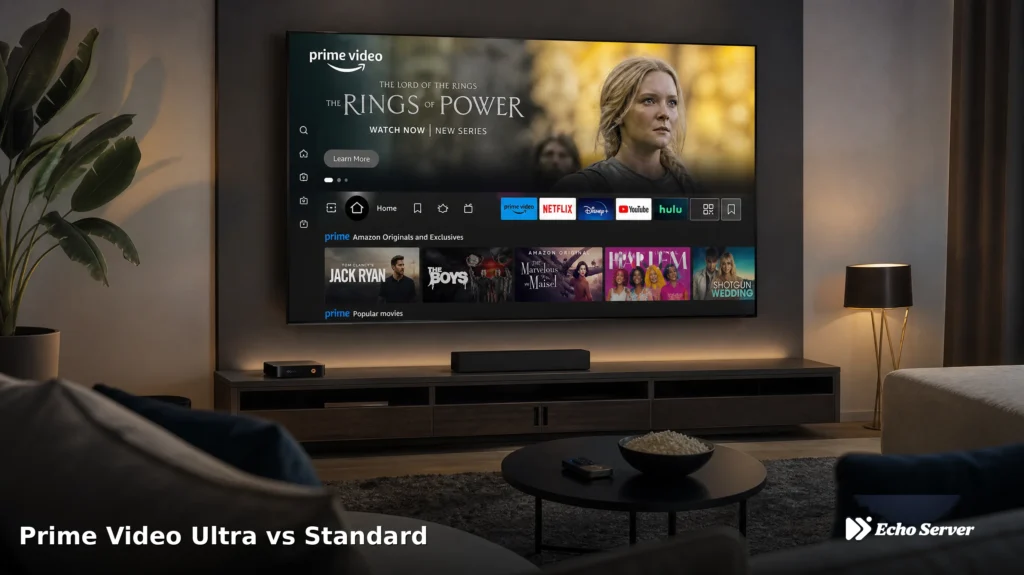
Not all Prime Video content is available in Ultra HD. Amazon’s 4K library includes Amazon Originals (The Boys, Jack Ryan, The Marvelous Mrs. Maisel) and select third-party movies and shows, but the majority of the catalog remains in HD or lower quality.
Estimated Ultra HD availability: Approximately 15-20% of Prime Video’s catalog supports 4K streaming. The rest maxes out at HD regardless of your device capabilities.
This limited 4K selection is where premium IPTV services like Echo Best IPTV gain an advantage—offering broader 4K content across live channels and on-demand libraries. Echo Best IPTV has served 50,000+ customers for 8 years with 25+ servers designed specifically for high-quality streaming.
3. Device Requirements
For Standard Quality:
- Any device with Prime Video app support
- No specific hardware requirements
- Works on older devices and budget streaming sticks
For Ultra Quality:
- 4K-capable display (TV or monitor)
- 4K-compatible streaming device (Fire TV Stick 4K, Roku Ultra, Apple TV 4K, etc.)
- HDMI 2.0 or later connection (for 4K passthrough)
- HDCP 2.2 copy protection support
If any component in your setup doesn’t support 4K, Prime Video will automatically downgrade to the highest quality your system can handle—typically 1080p.
4. Internet Bandwidth Requirements
Higher resolution demands more data. Here’s what Prime Video recommends for smooth streaming:
- Standard (SD): 0.9 Mbps minimum, 3 Mbps recommended
- Standard (HD 1080p): 5 Mbps minimum, 8 Mbps recommended
- Ultra (4K): 25 Mbps minimum, 40+ Mbps recommended for HDR content
Actual data consumption varies by content, but expect:
- HD streaming: ~3 GB per hour
- 4K Ultra HD: ~7 GB per hour
- 4K with HDR: ~8-10 GB per hour
For households with data caps or slower internet, Standard quality can prevent buffering and reduce monthly data usage significantly.
Looking for More Content and Better Value?
Echo Best IPTV offers 4K content availability across ALL subscription tiers, starting at just €29.90 per year. With 25+ servers and 50,000+ customers served over 8 years, we deliver reliable streaming with 24/7 support—no device restrictions, no limited 4K catalog.
Does Prime Video Ultra Cost Extra?
No. Prime Video Ultra HD is included with Amazon Prime membership at no additional cost—the same $139/year or $14.99/month subscription that provides free shipping and other Prime benefits.
The catch is device compatibility. You need 4K-capable hardware to access Ultra quality, which may require purchasing:
- A 4K TV ($300-$2,000+)
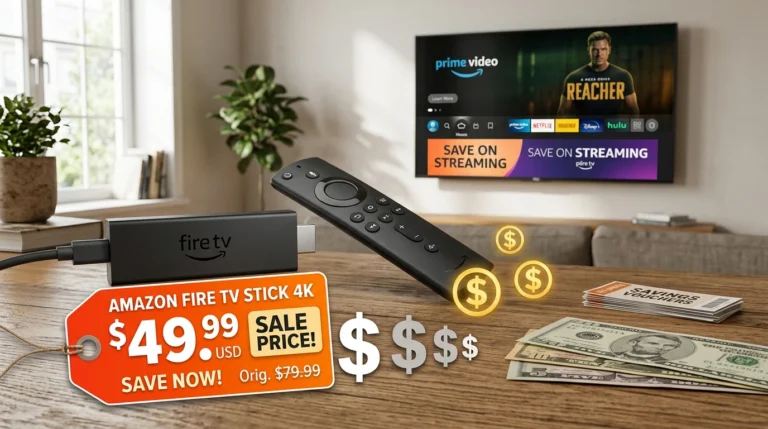
- A 4K streaming device like Fire TV Stick 4K ($50-$180)
- Faster internet service (if your current speed is below 25 Mbps)
While the streaming quality itself is free, the hardware investment can be significant. By comparison, Echo Best IPTV works on existing devices and delivers 4K content across all plans without hardware upgrades—Economy plan starts at €29.90 per year.
How to Check Which Quality You’re Getting
Prime Video automatically adjusts streaming quality based on your device, internet speed, and content availability. To verify what quality you’re actually receiving:
On Fire TV / Fire Stick:
- Open Prime Video
- Start playing any title
- Press the Menu button on your remote
- Look for quality indicators (HD, UHD, 4K)
On Mobile Devices:
- Open Prime Video app
- Go to Settings → Streaming Quality
- Options: Data Saver, Good, Better, Best
- “Best” enables highest available quality for your device
On Desktop/Web:
- Play any title on primevideo.com
- Click the Settings icon (gear symbol)
- Current resolution shown in quality settings
- Note: Web browsers typically max out at 1080p due to DRM restrictions
If you have 4K-capable equipment but content plays at 1080p or lower, check your internet speed and ensure HDCP 2.2 support on all connected devices.
Prime Video vs Echo Best IPTV: Which Offers Better Value?
Amazon Prime Video is a strong service for on-demand movies and shows, but it’s not designed as a complete TV replacement. Here’s how it compares to a dedicated IPTV service:
Content Coverage
Prime Video:
- On-demand movies and series only
- No live TV channels
- 15-20% of catalog in 4K
- Content rotates in and out of availability
Echo Best IPTV:
- Up to 20,000+ live channels (depending on plan)
- 50,000+ on-demand movies
- Up to 70,000+ series episodes
- 4K content available across all plans
- Catch-up TV on Ultra and Ultimate tiers
Annual Cost Comparison
Amazon Prime (with Video): $139/year or $14.99/month = ~$180/year
Echo Best IPTV Plans:
- Economy: €29.90/year (~$32/year)
- VIP: €39.90/year (~$43/year)
- Ultra: €49.90/year (~$54/year)
- Ultimate: €69.90/year (~$75/year)
Even Echo Best IPTV’s top-tier Ultimate plan costs 58% less than Amazon Prime annually while providing live TV channels Prime Video doesn’t offer.
Device Flexibility
Prime Video requires specific hardware for 4K playback and restricts simultaneous streams based on Prime Household settings. Echo Best IPTV works on Smart TVs, Android devices, Fire Sticks, and more with 4K available across all plans—no premium device required.
Support
Amazon provides email and chat support for Prime members. Echo Best IPTV offers 24/7 customer support throughout your entire subscription, with a 24-hour trial so you can test compatibility before committing.
When Prime Video Standard Is Enough
Despite Ultra’s advantages, Standard quality serves many viewers perfectly well:
- Smaller displays: On screens under 50 inches, 1080p looks sharp from normal viewing distances
- Casual viewing: Background viewing or content where visual fidelity isn’t critical
- Limited bandwidth: Homes with data caps or slower internet (under 25 Mbps)
- Older devices: No need to upgrade equipment just for 4K
- Mobile streaming: Phone and tablet screens can’t display full 4K detail
For these scenarios, Standard delivers satisfying picture quality without the bandwidth demands of Ultra HD.
When to Choose Prime Video Ultra
Ultra quality makes sense when:
- You have a large 4K TV: 55+ inches where increased resolution is visible
- You sit close to your screen: Less than 8 feet viewing distance
- You have fast internet: Reliable 40+ Mbps for HDR streaming
- You watch visually-rich content: Nature documentaries, action movies, shows filmed in 4K
- Your TV supports HDR: Dolby Vision or HDR10+ for enhanced contrast and color
But remember: only 15-20% of Prime Video content supports 4K, so you’ll still be watching most content in HD.
Experience Premium IPTV with Echo Best
Join 50,000+ satisfied customers streaming with Echo Best IPTV
- ✓ Up to 20,000+ live channels depending on plan
- ✓ 50,000+ movies & 70,000+ series in our library
- ✓ 4K content available across all plans
- ✓ 24/7 customer support throughout your subscription
- ✓ 24-hour trial to test before you buy
Get Started with Echo Best IPTV →
Annual plans from €29.90/year | 24-hour trial available
Frequently Asked Questions
Does Prime Video automatically upgrade to Ultra if I have a 4K TV?
Yes, Prime Video automatically detects your display capabilities and streams the highest quality your device and internet connection can support. If you have a 4K TV, compatible streaming device, and fast enough internet (25+ Mbps), Prime Video will automatically play Ultra HD content when available. No manual settings change is required, though you can force lower quality in app settings to save bandwidth.
Why does some 4K content on Prime Video look worse than HD?
This usually happens due to insufficient internet bandwidth causing the stream to buffer or downgrade quality mid-playback. Prime Video requires a stable 25+ Mbps connection for smooth 4K streaming. If your connection drops below this threshold, the service automatically reduces quality to prevent buffering—sometimes to 1080p or even 720p, which can look worse on a 4K display than native 4K content. Check your internet speed and close other devices using bandwidth during playback. Additionally, some older 4K content may have been upscaled from HD rather than filmed in native 4K, resulting in softer images.
Can I watch Prime Video Ultra on my laptop or desktop computer?
Limited support. Most web browsers (Chrome, Firefox, Safari) cap Prime Video streaming at 1080p HD due to DRM (Digital Rights Management) restrictions. Only Microsoft Edge on Windows 10/11 and the Safari browser on macOS support 4K playback through the web interface, and even then only for select content. For reliable 4K streaming, use the Prime Video app on a supported device like Fire TV 4K, Apple TV 4K, or a Smart TV app rather than watching through a web browser.
Is Prime Video’s 4K quality as good as Netflix or Disney+ 4K?
Generally yes, when comparing the same content format (4K HDR). Prime Video uses similar bitrates and supports the same HDR standards (HDR10, Dolby Vision) as Netflix and Disney+. Picture quality differences come down to the source material quality and how it was mastered for streaming rather than the streaming service itself. However, Prime Video’s 4K catalog is smaller than Netflix’s—approximately 15-20% of content versus Netflix’s 30-40% 4K availability. So while individual title quality is comparable, you’ll have fewer 4K options on Prime.
Does Prime Video Ultra use more battery on mobile devices?
Yes significantly. Streaming 4K content on a phone or tablet drains battery 40-60% faster than streaming HD due to the increased processing required to decode higher resolution video. Additionally, most phone screens can’t display true 4K resolution (they typically max out at 1440p), so you’re consuming extra battery for minimal visual benefit. For mobile viewing, Standard HD quality provides the best balance of picture quality and battery life.
Will I see a difference between Ultra and Standard on a 43-inch 4K TV?
It depends on viewing distance. If you sit 8-10 feet away (typical living room setup), the difference between 1080p and 4K on a 43-inch display is minimal and many viewers can’t distinguish between them. However, if you sit closer (5-6 feet), the increased sharpness of 4K becomes noticeable, especially in detailed scenes like nature footage or text on screen. HDR support provides a bigger visual improvement than resolution alone on smaller screens—the enhanced contrast and color range is visible from any distance.
Can I force Prime Video to always use Standard quality to save data?
Yes. In the Prime Video app settings (mobile or streaming device), you can select streaming quality preferences: Data Saver (lowest quality, ~0.6 GB/hour), Good (~1 GB/hour SD), Better (~2.3 GB/hour HD), or Best (up to 8+ GB/hour for 4K). Choose “Good” or “Better” to cap quality at HD regardless of your device’s 4K capabilities. On web browsers, go to Settings → Streaming Quality and select a lower option. This setting persists across sessions, so you won’t need to change it every time you watch.
Does Echo Best IPTV offer better 4K content availability than Prime Video?
Yes. Echo Best IPTV includes 4K content across all subscription tiers, including the entry-level Economy plan at €29.90 per year. While Prime Video limits 4K to approximately 15-20% of its catalog, Echo Best IPTV provides 4K availability across live channels and on-demand content with no device restrictions. Additionally, Echo Best IPTV’s higher-tier plans (Ultra and Ultimate) offer larger 4K selections and include features like catch-up TV that Prime Video doesn’t provide. With 25+ servers serving 50,000+ customers for 8 years, Echo Best IPTV is specifically designed for high-quality streaming across all content types.